
07 - 13 DEC 2026
07 - 13 DEC 2026


You know little or nothing about biathlon. This section is for you and will help you get to know this spectacular and exciting sport!
Biathlon is a competition combining two disciplines: cross-country skiing and shooting with a .22 calibre rifle, which must weigh at least 3.5 kilograms. Biathletes alternate between skiing and shooting (prone and standing) at five targets located 50 metres away, with a diameter of 4.5 centimetres for prone shooting and 11.5 centimetres for standing shooting. Each shooting error is penalised either by a time penalty (+1 minute for the individual event) or by a 150-metre penalty lap for the other events.
Spectacle, suspense, a television-friendly race format and the success of French biathletes are the main factors behind the success of biathlon, which continues to break viewing records in France and across Europe. On the French broadcaster L’Équipe, biathlon features six times in the channel’s top 10 highest-rated programmes. It achieved a record audience of 1.6 million viewers for the mass start in 2025. This equates to an average of 1.1 million viewers across the six races broadcast on L’Équipe.
For the 2026 edition, the figures will be:
Long before it became an Olympic sport that thrills crowds, biathlon was undoubtedly one of the oldest activities practised by the peoples of the Far North, who travelled on skis with bows on their backs to hunt. There are even traces of these skier-archers in Scandinavian mythology. Over the centuries, the practice developed, both for military purposes and for hunting. In 1924 in Chamonix, during the first Winter Olympic Games, a demonstration of Nordic patrol was organised, but until the end of the Second World War, biathlon remained an exclusively military sport…
Every year, the World Cup takes place from November to March, spread over 9 stages and 27 races, combining the men’s and women’s circuits.
Traditionally, the season starts in Scandinavia and then returns to the Alps. After the Christmas break, the three classics are contested: Oberhof and Ruhpolding in Germany, and Anterselva in Italy.
The end of the season often takes place in Scandinavia or Russia, although the world circuit sometimes makes forays into Asia or the United States.
Unlike the skiing events managed by the International Ski Federation, which organises a world championship every two years, there is a biathlon world championship every year, except in Olympic years when only events not included in the Games programme are eligible for a title.
Biathlon has been an Olympic sport since 1960.
In 1984, women’s biathlon officially appeared with the first world championship held in Chamonix. Women’s biathlon made its debut at the Games in 1992.
In France, the national circuit includes the French championships and Nordic Challenge events.
In the summer, roller ski events are organised.
In France, biathlon is governed by the French Ski Federation, while at the international level, the discipline is managed by the International Biathlon Union.
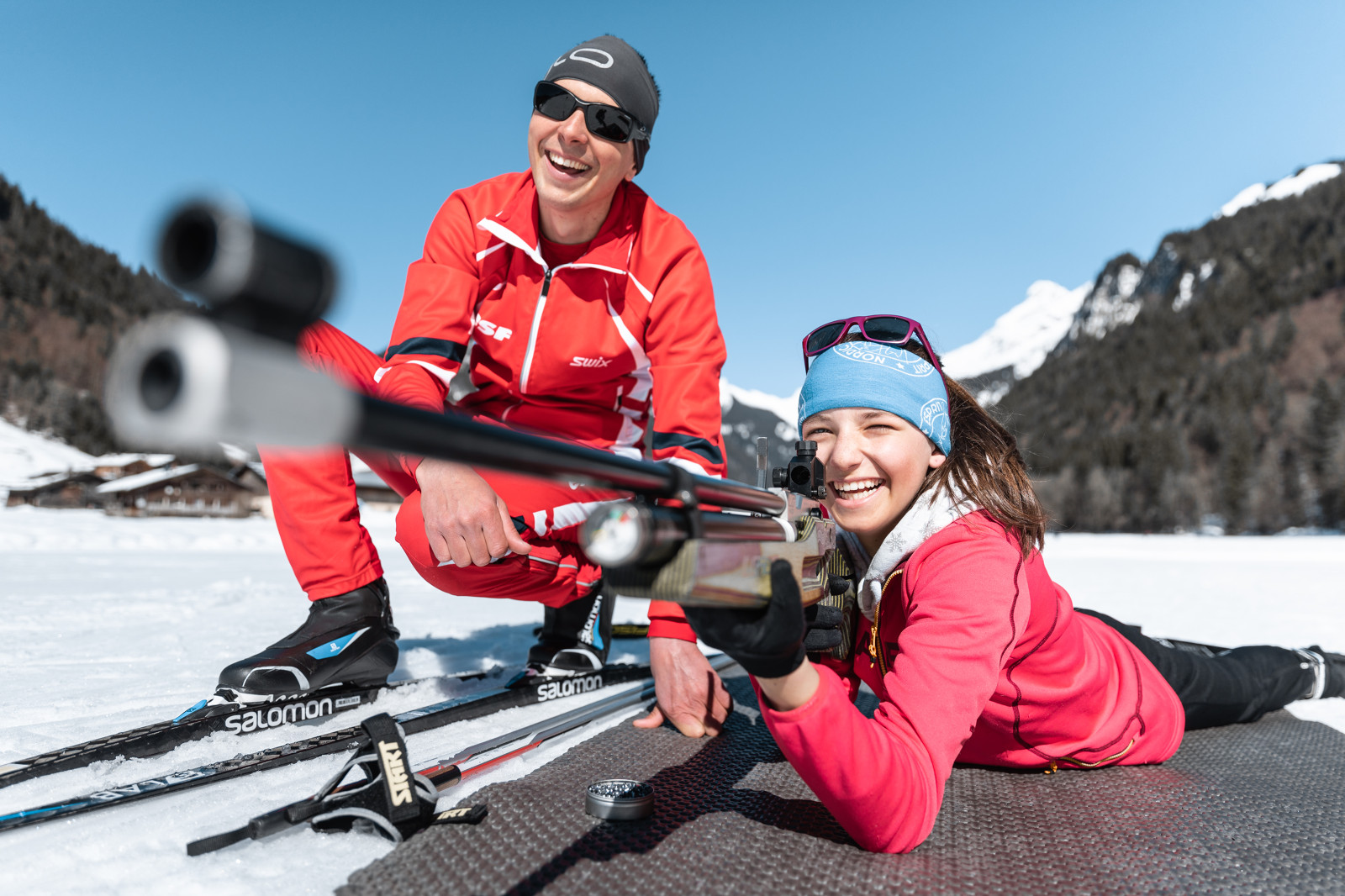
Discover biathlon, shooting at targets 10 or 50 metres away with an air rifle, a fun activity for the whole family that also improves concentration and stress management.
And for younger children, an introduction to the sport is available during laser sessions.